

How to Make Greek Moussaka
How to cook it
About this dish
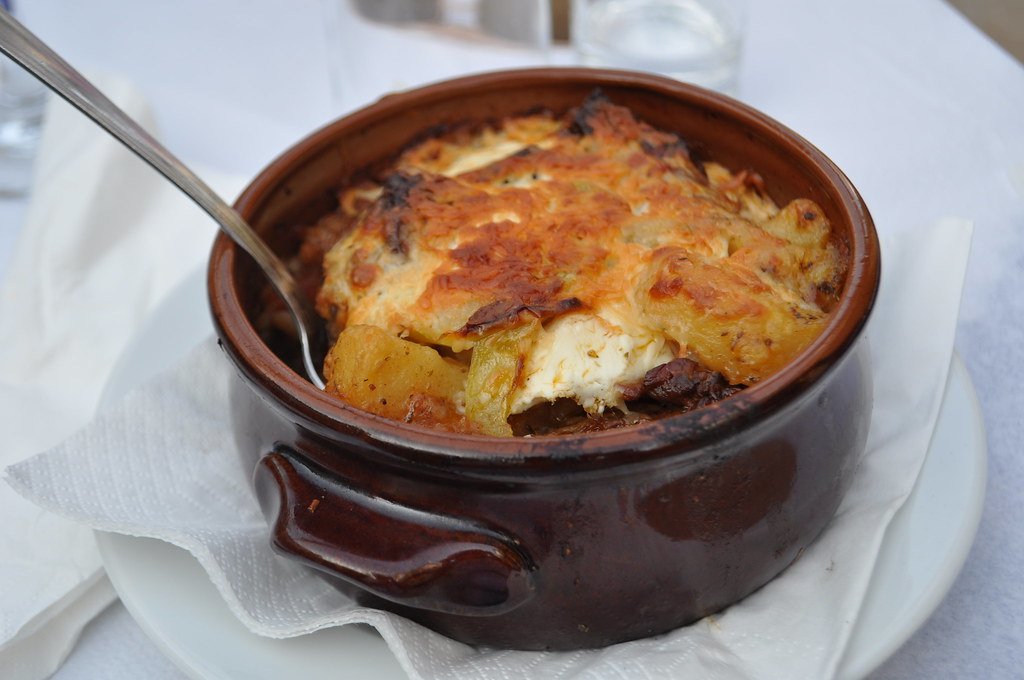
When it comes to make greek moussaka, moussaka is Greece's answer to lasagne — layers of fried aubergine and spiced lamb mince topped with a thick blanket of cinnamon-scented béchamel and baked until golden. It is a celebratory dish found on taverna menus across the islands and mainland alike.
Each component requires attention: aubergine must be salted and fried until tender, the meat sauce simmered until rich, and the béchamel beaten until silky. The assembly is straightforward, and the finished dish improves after resting, making it ideal for entertaining.
Recipe
Ingredients
- 3 large aubergines, sliced into 1 cm rounds
- 500 g lamb mince
- 1 onion, diced
- 2 garlic cloves, minced
- 400 g tinned chopped tomatoes
- 1 tsp ground cinnamon
- 60 g butter
- 60 g plain flour
- 600 ml whole milk
- 2 egg yolks
- 80 g Kefalotyri or Parmesan, grated
- Salt and black pepper, to taste
Step-by-step
Prepare the aubergine

Salt the aubergine slices and leave for 20 minutes. Pat dry, then fry in olive oil over medium heat until golden on both sides. Drain on kitchen paper. Lay out everything you need within arm's reach and read the full sequence once before starting make greek moussaka — missing a single tool mid-task is the main reason simple jobs overrun their time estimate. Note what worked in a phone memo so you can repeat the process faster next time.
Cook the meat sauce

Brown the lamb mince in a pan, breaking it up as it cooks. Add the onion and garlic, cooking until soft. Stir in tomatoes, cinnamon, salt, and pepper. Simmer for 20 minutes until thick. Preheat equipment fully and use a food thermometer for meat and reheated dishes — visual cues alone are unreliable, and the FSA recommends core temperatures above 70 °C for two minutes when reheating. Note what worked in a phone memo so you can repeat the process faster next time.
Make the béchamel

Melt butter, stir in flour, and cook for 1 minute. Gradually whisk in milk and simmer until thick. Remove from heat, beat in egg yolks and half the cheese. Season with salt, pepper, and a pinch of nutmeg.
Assemble the moussaka

Layer half the aubergine in a baking dish, spread the meat sauce over the top, then add the remaining aubergine. Pour the béchamel evenly over the surface and sprinkle with remaining cheese. Work steadily through this part of make greek moussaka, pausing to double-check your work against the goal before moving on — most mistakes are caught when you slow down at transitions between stages. Note what worked in a phone memo so you can repeat the process faster next time.
Bake and rest

Bake at 180°C for 40–45 minutes until the top is deep golden and set. Rest for at least 15 minutes before cutting into squares to serve. Preheat equipment fully and use a food thermometer for meat and reheated dishes — visual cues alone are unreliable, and the FSA recommends core temperatures above 70 °C for two minutes when reheating. Note what worked in a phone memo so you can repeat the process faster next time.
Sources and further reading
Facts, limits, and safety notes in this guide are cross-checked against the references below. Laws, fees, and product guidance change — always confirm details for your region before acting.
Background concepts and terminology
Wikipedia — Make greek moussaka🔧 Troubleshooting
The aubergine is too bitter after salting.
Ensure that you are using fresh aubergines and allow them to sit with salt for at least 30 minutes. Rinse and pat dry before cooking to remove excess salt and bitterness.
The béchamel sauce is lumpy.
Make sure to whisk the flour and butter together thoroughly before adding the milk. If lumps form, continue to whisk vigorously over low heat until the sauce smooths out. If necessary, you can strain the sauce through a fine sieve.
❓ FAQs
Can I make moussaka with beef instead of lamb?
Beef mince works well and is a common substitution. The flavour will be milder but still delicious with the cinnamon and tomato sauce.
Can moussaka be made ahead?
Yes — assemble up to a day ahead and refrigerate, or bake and reheat portions. It often tastes better the next day.
Was this guide helpful?
Guide by Elena Rossi
Chef and recipe developer. Trained in Rome and London kitchens — now focuses on teaching home cooks measurement, prep systems, and weeknight meal planning.
You might also like
Similar guides based on topic, category, and tags.
How to Make Chicken Caesar Salad
About this dish
How to Make Guacamole
About this dish
How to Make Hummus
About this dish

How to Make Fluffy Pancakes
About this dish
How to Make Thai Green Curry
About this dish

How to Make Beef Tacos
About this dish
Comments
Log in to comment.